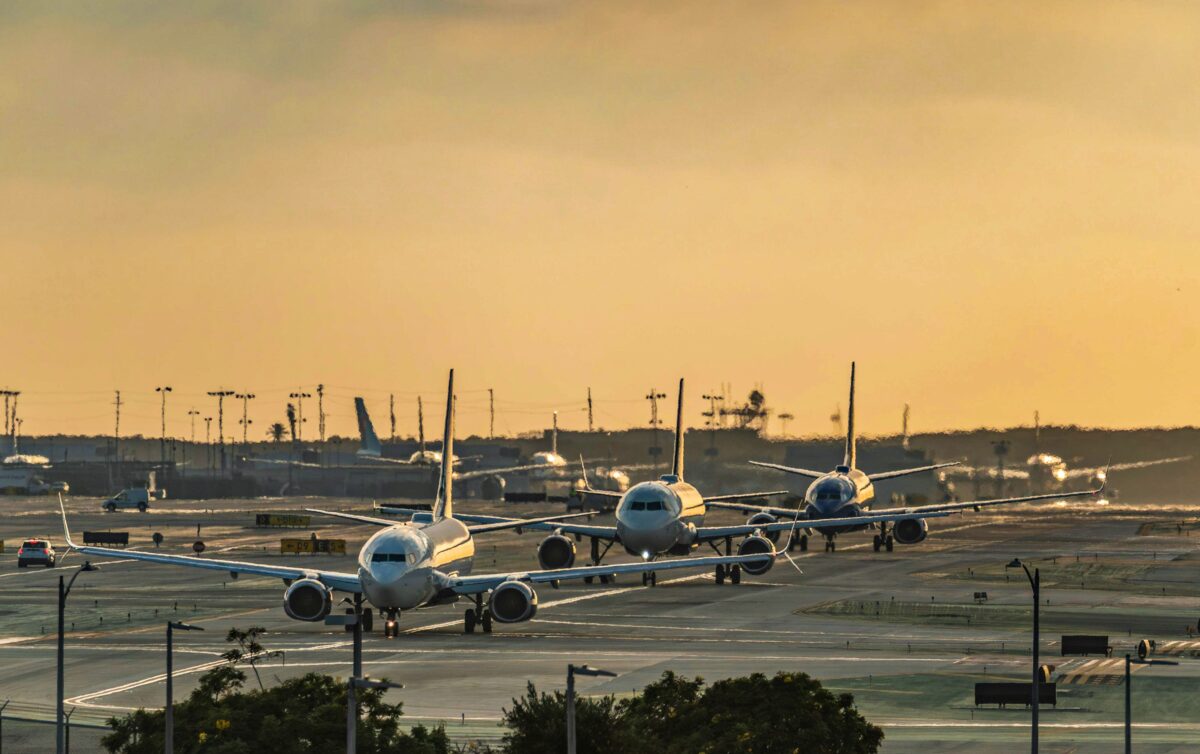


Dedicated air traffic control supervision becomes mandatory for Line Up and Wait operations, strengthening runway safety oversight but potentially affecting departure sequencing at airports facing controller staffing constraints.
A significant change to US air traffic control procedures
The Federal Aviation Administration (FAA) has introduced a new mandatory staffing requirement for air traffic control facilities conducting Line Up and Wait (LUAW) operations, marking a significant change to how supervisory responsibilities must be organised during runway operations.
The requirement is contained in FAA Notice JO 7210.979 – Line Up and Wait (LUAW) Operations Watch Supervision Requirement, issued on 9 October 2026 and effective from 24 November 2026.
The directive requires a stand-alone watch supervision position to be staffed whenever LUAW operations are conducted. The person fulfilling this responsibility must not simultaneously perform another operational role.
The FAA identifies the objective as strengthening runway safety by ensuring that personnel responsible for watch supervision can concentrate exclusively on their supervisory responsibilities, without the potential distraction of managing other air traffic control duties.
Importantly, this is an operational policy change issued through an FAA notice amending FAA Order JO 7210.3, rather than a new Federal Aviation Regulation or a change to the basic pilot procedure for receiving a takeoff clearance.
Understanding Line Up and Wait (LUAW)
Line Up and Wait is an established air traffic control instruction used to position an aircraft on its assigned departure runway in preparation for an imminent departure.
When instructed to line up and wait, pilots taxi onto the assigned runway, align the aircraft with the departure direction and remain stationary while awaiting further instructions from air traffic control.
Crucially, a LUAW instruction is not a takeoff clearance.
The procedure is particularly useful at busy airports where departure sequencing and runway occupancy times are important considerations.
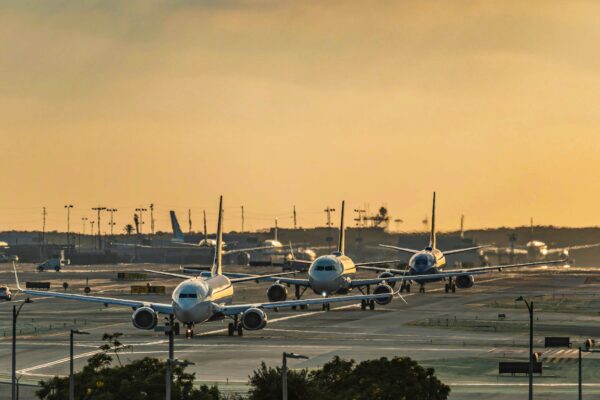
Rather than keeping every departing aircraft at a taxiway holding point until the runway becomes available, controllers can position an aircraft on the runway in advance when the applicable operational conditions permit.
This can help reduce the time between successive departures and improve the utilisation of available runway capacity.
However, LUAW operations require careful coordination between arriving and departing traffic, particularly where aircraft are operating on the same runway or where intersecting runways are in use.
The FAA’s Aeronautical Information Publication specifically highlights the importance of pilots maintaining situational awareness while holding in position, monitoring instructions to other aircraft and ensuring that a takeoff clearance has actually been received before commencing departure.
What exactly has changed under FAA Notice JO 7210.979?
The new directive changes the staffing requirements contained in paragraph 10-3-8 of FAA Order JO 7210.3, which governs facility operations and administration.
There are two particularly important provisions.
A. Dedicated watch supervision
The FAA now requires a stand-alone Operations Supervisor (OS) or Controller-in-Charge (CIC) position to be staffed during LUAW operations.
This position cannot be combined with any other operational position.
Previously, the guidance recommended that watch supervision should not be combined with other operational responsibilities. The new notice makes this a mandatory requirement.
B. Separation of local control responsibilities
The directive also specifies that the local control position cannot be combined with any non-local control position.
The FAA specifically identifies the following examples:
- Watch supervision (OS/CIC).
- Clearance delivery.
- Flight data.
- Ground control.
- Cab coordinator.
There are limited permitted combinations. Local control can still be combined with other local control positions, including tower associate (local assist) and local monitor positions. The notice also provides for combining local control with an established Class B/helicopter position with defined control tower airspace.
These provisions are important because they establish a clearer separation between the controller managing immediate runway operations and the personnel responsible for supervising the wider operation.
Why has the FAA introduced the requirement?
The FAA’s stated objective is to improve runway safety and remove ambiguity around supervisory staffing during LUAW operations.
The agency’s concern is that supervisory personnel who are simultaneously performing operational tasks may not be able to devote sufficient attention to their oversight responsibilities.
Runway operations are among the most safety-critical activities within an airport environment. They require continuous coordination, situational awareness and effective communication between controllers, pilots and other airport stakeholders.
A supervisor who is also managing ground movements, coordinating clearances or undertaking another operational role may face competing demands for attention.
By requiring a dedicated supervisory position, the FAA intends to provide a more clearly defined oversight structure.
It is worth noting that the published notice does not identify a specific runway incursion, accident or individual safety event as the reason for introducing the requirement. The stated justification is the improvement of safety oversight through clearer and more robust staffing arrangements.
Potential implications for airport capacity and departure performance
While the FAA’s primary objective is improving runway safety, the operational implications could extend beyond the control tower.
The main concern is whether every affected facility has sufficient personnel available to maintain a separate supervisory position while continuing to operate its existing control positions.
At airports with sufficient staffing, the change may have little practical effect on daily operations.
However, facilities that previously relied on controllers undertaking multiple responsibilities may need to reorganise their staffing arrangements.
Where a dedicated supervisor cannot be provided, the facility cannot conduct LUAW operations under the new requirement.
This creates a potential operational constraint, particularly during periods of high departure demand.
Potential effects on departure operations
Reduced flexibility in departure sequencing
LUAW provides controllers with an additional tool for managing aircraft positioning on the runway. If the procedure becomes unavailable because of staffing constraints, aircraft may need to remain at the runway holding point until the appropriate clearance can be issued.
Increased taxi-out times
Aircraft waiting at holding points for departure clearance may experience longer ground waiting periods, particularly during peak departure banks.
The extent of the impact will depend on the airport’s runway configuration, traffic demand and the availability of alternative sequencing arrangements.
Reduced runway throughput
At airports where LUAW is an important component of departure sequencing, restrictions on its use could affect the number of aircraft that can be efficiently processed during busy periods.
This is a potential consequence rather than a measured reduction in runway capacity. The FAA has not published an estimate of the expected throughput impact.
Knock-on effects across airline networks
Even relatively small increases in departure delays can create wider operational consequences when aircraft are operating multiple sectors throughout the day.
For example, a delay on an early morning departure could affect subsequent rotations, crew duty planning, connecting passenger itineraries and aircraft availability.
For airlines operating tightly scheduled networks, the cumulative effect may be more significant than the initial departure delay.
Controller staffing: the wider challenge facing the FAA
The timing of the new requirement is particularly relevant given the continuing challenges associated with air traffic controller staffing in the United States.
In May 2026, the FAA published its 2026 Air Traffic Controller Workforce Plan, identifying a target of 12,563 Certified Professional Controllers (CPCs) based on forecast operational demand.
The agency reported that approximately 11,000 certified professional controllers were deployed across more than 300 air traffic facilities as of April 2026.
The workforce plan also identified approximately 4,000 controllers in the training pipeline, including personnel transferring between facilities.
The FAA acknowledged that training and certification can take more than two years, depending on the complexity of the assigned facility.
The difference between the reported deployed workforce and the target is approximately 1,563 controllers.
It is important not to interpret this figure as a direct measurement of the number of vacant positions at individual airports. Staffing requirements vary considerably between facilities, and the FAA’s workforce plan also considers scheduling efficiency and operational requirements.
Nevertheless, it provides important context for understanding why an additional dedicated staffing requirement could create challenges at facilities with limited personnel flexibility.
The FAA’s position is that the new measures will not affect airport operations. However, controllers have expressed concerns that the requirement could make it more difficult to maintain existing departure efficiencies where staffing is already constrained.
Thanksgiving travel: a particularly challenging implementation date
The timing of the directive has attracted considerable attention because it became effective on 24 November, immediately ahead of the US Thanksgiving holiday travel period.
Thanksgiving is traditionally one of the busiest periods for domestic air travel in the United States, placing additional pressure on airport infrastructure, air traffic control facilities and airline operations.
According to reporting by The Washington Post, the FAA forecast 417,775 flights between 23 November and 1 December 2026, representing the busiest Thanksgiving travel period in 16 years.
American Airlines also forecast that it would serve more than eight million customers across almost 85,000 flights between 19 November and 1 December.
The introduction of the staffing requirement during this period has raised questions about whether airports with limited staffing flexibility could experience additional departure delays.
What has been reported by controllers?
Reporting by CNN and The Washington Post highlighted concerns raised by air traffic controllers about the availability of dedicated supervisory personnel.
In one reported exchange at Albuquerque International Sunport, an air traffic controller advised pilots that LUAW operations might no longer be available without adequate staffing.
A pilot subsequently questioned whether the change could lead to delays, with the controller acknowledging that this was possible.
These reports provide an indication of operational concerns at individual facilities, but they should not be interpreted as evidence of a nationwide reduction in departure capacity.
The FAA, meanwhile, has maintained that the changes will not impact airport operations.
This highlights the difference between the agency’s assessment of the policy and concerns expressed by operational personnel about how it may work in practice.
What does the change mean for airline Operations Control Centres?
For airline Operations Control Centres (OCCs), the most important consideration is the potential impact on ground operations and departure predictability.
The directive does not introduce a new flight planning requirement, alter aircraft performance calculations or change the basic requirements for obtaining an ATC takeoff clearance.
However, it could influence the operational environment in which departures are managed.
Airlines should consider the following areas when assessing potential exposure.
Departure delay monitoring
OCC teams should continue monitoring taxi-out times and departure performance at US airports where LUAW is frequently used.
A comparison of actual taxi-out times against historical airport performance could help identify whether the new requirements are associated with any measurable changes.
Aircraft rotation management
Additional ground delays may affect aircraft rotations, particularly where aircraft operate multiple sectors with limited turnaround margins.
OCC teams may need to consider the potential impact on subsequent departures, aircraft positioning and recovery options.
Crew duty management
Where additional ground delays occur, flight crew duty limitations and planned operating schedules may become relevant.
Dispatch and crew control teams should continue to monitor available duty margins and assess the consequences of any sustained departure disruption.
Fuel planning and operational efficiency
Longer taxi-out periods can increase fuel consumption, particularly when aircraft are operating with engines running during extended ground delays.
The impact will vary according to aircraft type, ground conditions, taxi procedures and the duration of the delay.
Operators should distinguish between additional taxi time and additional fuel burn rather than assuming that every minute of delay produces an identical fuel penalty.
Schedule reliability and passenger connections
Airlines operating connecting hubs may be particularly sensitive to delays affecting the first wave of departures.
A relatively small departure delay can have a disproportionate effect on downstream connections, aircraft rotations and passenger reaccommodation requirements.
For this reason, monitoring actual operational performance will be more useful than assuming that every airport will experience the same impact.
Implications for pilots and flight crews
For flight crews, the FAA notice does not introduce a new pilot-facing procedure for accepting a LUAW instruction.
However, the existing requirements surrounding the instruction remain particularly important.
The FAA’s Aeronautical Information Publication highlights several operational considerations:
- A LUAW instruction does not authorise an aircraft to commence takeoff.
- Pilots must remain alert to ATC instructions and clearances issued to other aircraft.
- When multiple runways are active, crews must pay particular attention to their assigned runway and callsign.
- Where a takeoff clearance is unclear or may have been issued to another aircraft, pilots should seek clarification.
- Pilots should remain aware of the time spent holding in position, particularly where the reason for the instruction has changed or the expected departure has been delayed.
The FAA also highlights historical safety concerns involving aircraft departing without receiving a takeoff clearance, reinforcing why clear communications and situational awareness remain essential during runway operations.
The new supervisory requirement should therefore be viewed as an additional layer of operational oversight rather than a replacement for established pilot responsibilities.
Which airports could be most affected?
The FAA notice applies to the specified Air Traffic Organization service units and their associated air traffic facilities. It is not a blanket restriction on all US airports irrespective of their operational arrangements.
The actual impact will depend on local staffing and how each facility organises its control positions.
Three broad operating environments are worth considering:
| Airport environment | Potential exposure |
|---|---|
| Major international hubs | High departure demand, but potentially greater staffing flexibility |
| Medium-sized commercial airports | Potential sensitivity where supervisory and control duties are combined |
| Regional and smaller airports | Potentially greater staffing constraints, depending on facility arrangements |
These are operational considerations, not an FAA-published ranking of affected airports.
The notice does not identify individual airports that will be unable to conduct LUAW operations, nor does it publish a list of facilities expected to experience restrictions.
It would therefore be premature to identify specific airports as affected without supporting operational data.
What should airlines and airport operators monitor?
The introduction of the new requirement creates an opportunity for airlines and airport operators to examine the relationship between ATC staffing arrangements, runway utilisation and departure performance.
For airline OCCs and airport performance teams, several indicators will be particularly useful.
| Performance indicator | Why it matters |
|---|---|
| Average taxi-out time | Identifies changes in ground departure performance |
| Actual runway departure rate | Measures operational throughput |
| Departure queue length | Indicates potential surface congestion |
| ATC-related departure delays | Helps identify possible external causes |
| Off-block to takeoff time | Measures total ground time before departure |
| Fuel used during taxi | Quantifies the fuel impact of ground delays |
| Aircraft rotation punctuality | Identifies downstream network consequences |
A meaningful assessment should compare equivalent operating periods, taking into account weather, traffic volume, runway configuration, construction, airport restrictions and other causes of delay.
This is particularly important because the Thanksgiving period itself produces significant variations in airport demand.
A simple before-and-after comparison without accounting for these factors could incorrectly attribute normal seasonal congestion to the new FAA requirement.
How long will the new requirement remain in effect?
FAA Notice JO 7210.979 was issued on 9 October 2026 and became effective on 24 November 2026.
The published notice identifies a cancellation date of 9 June 2027.
This is important because the measure has been introduced through an interim FAA notice amending the existing facility operations order, rather than through a permanent standalone regulation.
The FAA’s official record of changes also lists the notice and its effective date within the record for FAA Order JO 7210.3EE.
The cancellation date should not automatically be interpreted as a guarantee that the requirement will end permanently on that date. The FAA may issue a further notice, extend the measure or incorporate the requirement into a subsequent revision of its operational orders.
Wider implications for international aviation
Although this directive applies to the FAA’s US air traffic control environment, the underlying issue is relevant to aviation authorities and airport operators internationally.
Airports worldwide face the same fundamental challenge of balancing runway safety, operational efficiency and available air traffic control resources.
The requirement for dedicated supervisory oversight also raises broader questions about how air traffic control facilities organise responsibilities during periods of high operational demand.
For international airlines operating into the United States, the immediate consideration will be whether the revised staffing arrangements affect departure performance at their destination and departure airports.
For aviation authorities elsewhere, the FAA’s approach may provide a useful reference point when reviewing the separation of supervisory and operational responsibilities within tower environments.
However, the FAA notice does not establish a new international standard, nor does it automatically change ICAO requirements or the regulations of other national aviation authorities.
The development is therefore best understood as a US-specific operational policy change with potentially wider relevance to airport safety management.
Safety versus operational efficiency
The FAA’s decision highlights a familiar challenge within modern aviation: maintaining operational efficiency while ensuring that safety oversight is not compromised by resource constraints.
Line Up and Wait is an established tool for managing runway occupancy and departure sequencing. Its value is particularly apparent at airports handling high volumes of traffic, where even relatively small changes in departure sequencing can influence overall runway utilisation.
The introduction of mandatory, stand-alone supervisory staffing establishes a clearer separation between operational control and oversight.
From a safety perspective, this provides a more defined allocation of responsibilities.
From an operational perspective, however, it creates an additional staffing requirement that facilities must accommodate before conducting LUAW operations.
The real test will be how consistently the requirement can be implemented across the FAA’s network without creating unnecessary restrictions on airport capacity.
For airlines, the immediate priority should be monitoring actual departure performance rather than assuming that the change will automatically result in longer delays.
For airport operators and air traffic control management, the challenge will be ensuring that appropriate staffing arrangements are available to maintain both runway safety and operational efficiency.
The FAA has made its position clear: dedicated supervisory oversight is now a mandatory requirement for LUAW operations. Whether this results in measurable changes to airport departure performance will become clearer as operational data emerges over the coming weeks and months.