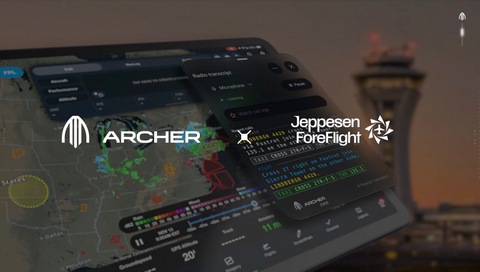


Archer Aviation and Jeppesen ForeFlight have announced a new partnership focused on bringing real-time Air Traffic Control (ATC) transcription capabilities to ForeFlight Mobile, one of the world’s most widely used Electronic Flight Bag (EFB) platforms for general aviation pilots.
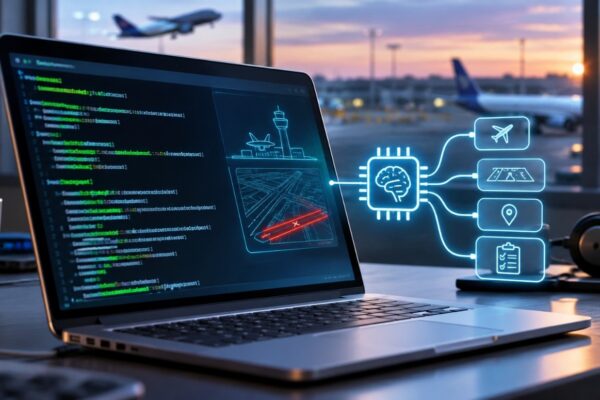
The collaboration will see the integration of Archer’s aviation-focused AI foundation model, ZEE, into ForeFlight Mobile, enabling pilots to view ATC instructions as readable text in real time directly on their iPad. The initiative is designed to help pilots confirm clearances, verify readbacks and reduce the risk of communication-related errors during flight operations.
The announcement represents another example of artificial intelligence being applied to a practical flight deck challenge, targeting an area of aviation that has remained largely unchanged for decades.
Addressing a Long-Standing Flight Deck Challenge
Despite significant advances across aviation technology, ATC communications continue to rely primarily on analogue VHF radio transmissions. Once a clearance or instruction has been spoken, pilots are required to rely on memory, note-taking or standard cockpit procedures to ensure instructions are correctly understood and executed.
The new integration aims to provide pilots with a continuously available text record of radio communications, allowing ATC instructions to be reviewed after transmission rather than disappearing once spoken.
According to Archer, communication errors remain a significant contributing factor in aviation safety reports, with readback and hearback issues continuing to feature in operational incidents across the industry. By converting radio transmissions into readable text in real time, the companies believe pilots will have an additional layer of support to improve communication accuracy and situational awareness during flight.
Powered by Archer’s ZEE Aviation AI Model
At the centre of the partnership is ZEE, Archer’s purpose-built aviation foundation model developed specifically for flight operations applications.
Unlike many AI services that rely on cloud connectivity, ZEE has been optimised to run directly on Apple silicon devices, allowing transcription to take place locally on the iPad without requiring an internet connection. This is particularly significant for aviation environments where reliability and continuous availability are critical.
According to Archer, the model has been trained using more than 100,000 hours of real-world ATC communications, helping it recognise aviation phraseology, clearances and controller instructions with the level of accuracy required for operational use.
The ability to process communications entirely on-device also reflects a growing industry emphasis on deploying AI capabilities closer to the point of operation rather than relying exclusively on cloud-based infrastructure.
Integration Within ForeFlight Mobile
The initial phase of the collaboration focuses on evaluating ZEE’s transcription capabilities within ForeFlight Mobile using real-world ATC communications.
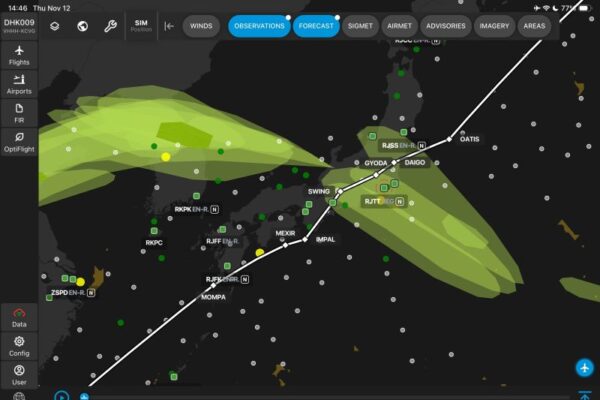
ForeFlight Mobile is already widely used by pilots for flight planning, navigation, weather briefings, charting and operational decision support. Adding ATC transcription could significantly expand the platform’s role in helping pilots manage radio communications throughout a flight.
Should testing and evaluation prove successful, the capability could provide an additional reference layer for pilots operating in high-workload environments, enhancing their ability to cross-check and confirm ATC instructions.
The companies have indicated that further details regarding development plans and future product availability are expected in 2027.
What the Industry Leaders Are Saying
Adam Goldstein, Founder and CEO of Archer, highlighted the operational and safety benefits that real-time transcription could bring to pilots.
“Today is an important step forward for pilot safety. Every pilot knows the moment when you read back a clearance and wonder whether you heard it right. Air traffic control still runs on analog radio, and an instruction is gone the second it’s spoken. We built ZEE to change that. Putting it in ForeFlight Mobile gives pilots a written record of every instruction, in the cockpit, in the app they already trust.”
From the ForeFlight side, Travis Root, Senior Vice President, Product and Engineering, Flight Deck at Jeppesen ForeFlight, emphasised the company’s focus on reliability and operational trust.
“Accuracy, safety and trust guide everything we build for pilots, and they guide this integration too. We’re evaluating how Archer’s ZEE AI Foundation Model can bring real-time ATC transcription to ForeFlight Mobile and help pilots verify readbacks and catch errors.”
Mario Srouji, Vice President of AI Products at Archer and a pilot himself, pointed to the operational realities pilots face when managing radio communications.
“As a pilot, I know a misheard clearance is a stressful moment in flight. Partnering with Jeppesen ForeFlight to integrate the transcription capability of our ZEE Foundation Model in ForeFlight Mobile is a first step toward giving pilots a clear, accurate record of what ATC said.”
A Growing Role for AI in Flight Operations
The partnership highlights a broader trend across aviation, where artificial intelligence is increasingly being applied to operational workflows, flight deck decision support and situational awareness.
Rather than replacing pilot judgement, solutions such as real-time ATC transcription are being positioned as tools that support pilots in managing workload, improving communication accuracy and reducing the risk of misunderstandings during critical phases of flight.
For pilots, operators and flight operations professionals, the Archer and Jeppesen ForeFlight collaboration provides an early glimpse into how AI-enabled Electronic Flight Bags could evolve beyond traditional planning and navigation functions towards more active operational assistance capabilities.
As development progresses, the industry will be watching closely to see whether real-time ATC transcription becomes a standard feature within future cockpit workflows and a meaningful contributor to aviation safety.