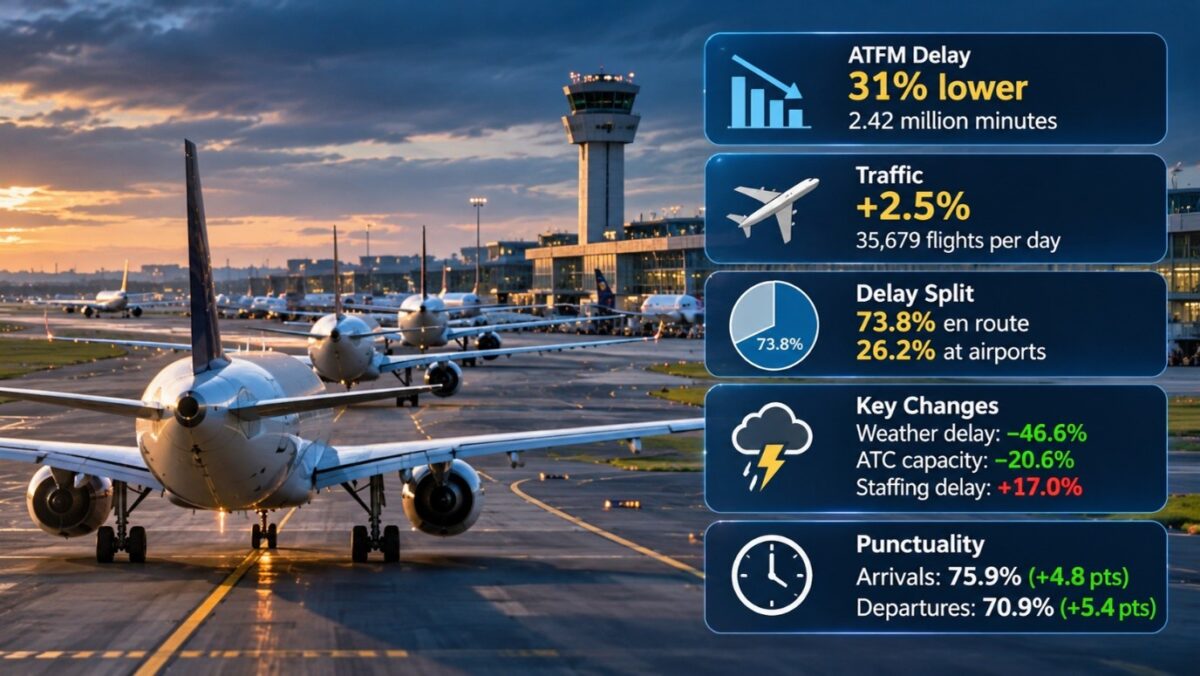


Air traffic flow management (ATFM) delays across the EUROCONTROL Network Manager area fell 31% in September 2026, despite a 2.5% increase in flight traffic compared with the same month last year.
According to EUROCONTROL’s September Network Operations Report, the network recorded 2.42 million minutes of ATFM delay, while handling an average of 35,679 flights per day.
Punctuality also improved. On-time arrivals reached 75.9%, up 4.8 percentage points, while departure punctuality improved by 5.4 points to 70.9%.
Weather Delays Fall, but Staffing Pressures Increase
En-route restrictions accounted for 73.8% of total ATFM delay, with airport-related restrictions responsible for the remaining 26.2%.
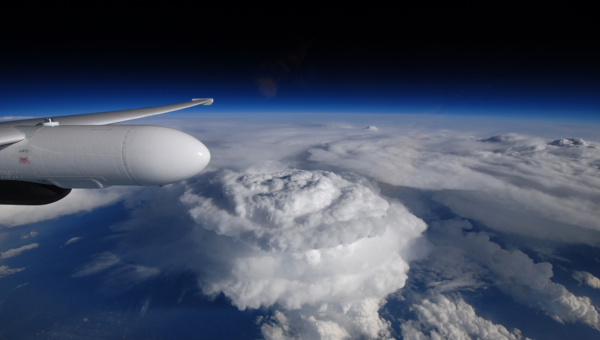
En-route weather-related delays fell 46.6% compared with September 2025, contributing to the overall improvement.
ATC capacity remained the leading cause of en-route delay, although its impact decreased by 20.6%.
Staffing-related delays moved in the opposite direction, increasing by 17%.
Barcelona Area Control Centre (ACC) was the largest contributor to network delay, primarily because of capacity constraints. Marseille, Makedonia and Reims also recorded significant delays.
Why Staffing Is the Figure to Watch
September’s results show that higher traffic does not necessarily translate into more network delay.
However, the sharp reduction in weather-related disruption makes it difficult to determine how much of the improvement reflects lasting gains in available capacity.
For airline operations teams, the increase in staffing-related delay deserves attention. Where it persists at particular ACCs, it can influence route selection, departure planning and the reliability of aircraft rotations.
The harder test will come next summer, when convective weather and peak traffic return together.