

Learning a new aircraft’s Flight Management System (FMS) traditionally involves classroom instruction, computer-based training and time in dedicated training devices. But what if pilots could practise complex FMS procedures independently, before entering a full-flight simulator?
For Lufthansa City Airlines, that opportunity comes as the airline prepares for a substantial Airbus A220 fleet introduction.
The carrier has selected Austrian aviation software developer Heading365 to provide its Airbus A220 FMS Trainer PRO application across its entire pilot workforce.
Lufthansa City Airlines has 40 A220-300 aircraft on firm order, with options for 20 more. Deliveries are scheduled between 2026 and 2031, creating a multi-year requirement to prepare pilots for the new aircraft type.
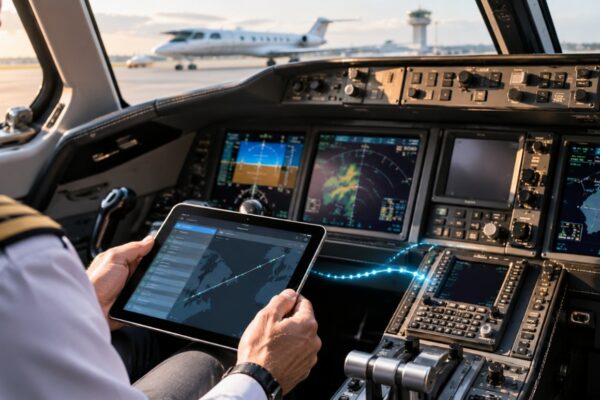
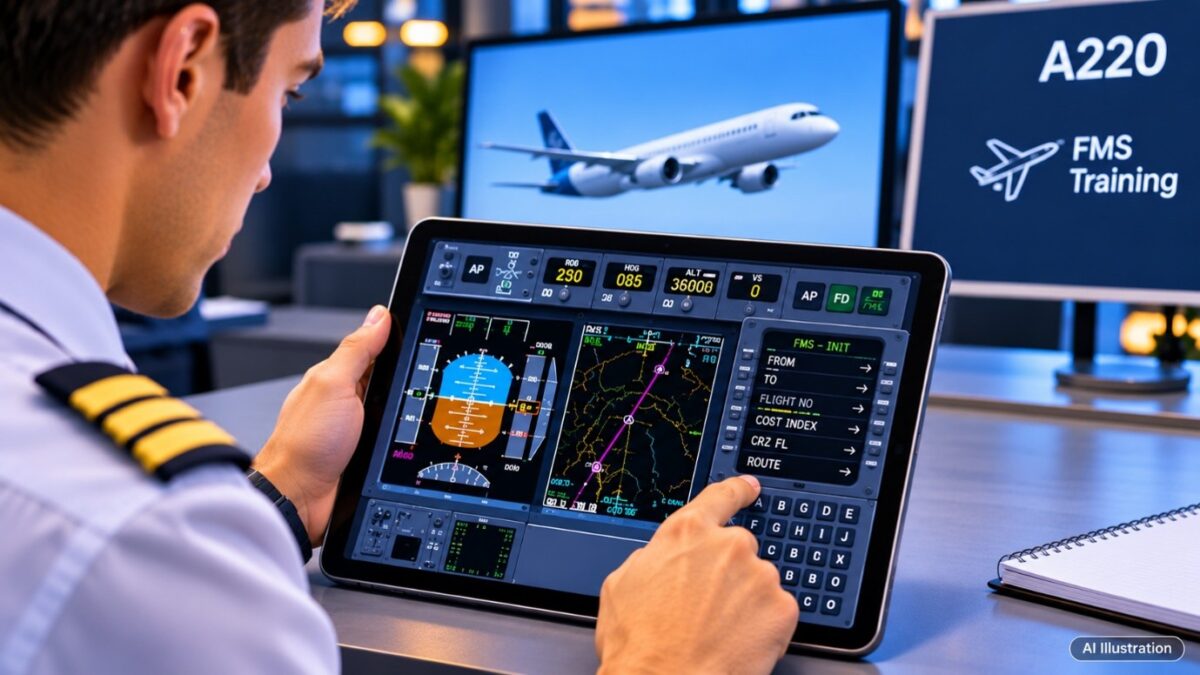
The iPad-based application is intended to support that transition by allowing pilots to familiarise themselves with the A220’s flight management and autoflight systems outside conventional simulator sessions.
More Than an FMS Emulator
Unlike applications that focus primarily on the Flight Management System’s control interface, Heading365’s A220 trainer combines several cockpit functions within one training environment.
These include the Primary Flight Display (PFD), Vertical Situation Display (VSD), Flight Control Panel (FCP) and integrated autoflight functionality.
According to Heading365, pilots can practise flight scenarios, programme routes, explore flight phases and observe how FMS inputs interact with other cockpit systems.
The software also allows training scenarios to be saved and reloaded, enabling instructors to prepare specific exercises or starting conditions.
The airline’s decision to make the application available across its pilot workforce, rather than limiting it to an individual training group, reflects the scale of its planned A220 introduction.
Making Better Use of Simulator Time
Full-flight simulators are essential for aircraft qualification, but they are also expensive, heavily scheduled training resources.
Heading365 positions its software as a way to develop FMS familiarity before pilots enter those simulators, potentially allowing simulator sessions to concentrate on more demanding training objectives.
That is a training benefit claimed by the developer, rather than a measured efficiency improvement demonstrated by Lufthansa City Airlines.
The application does not replace approved simulator training, aircraft type-rating requirements or instructor-led competency assessments.
For an airline introducing a new aircraft type over several years, accessible tools for independent procedural practice can support consistent preparation across successive groups of pilots.
The significance is not simply putting cockpit software on an iPad. It is giving an expanding pilot workforce more opportunities to understand the relationship between flight management inputs and aircraft behaviour before those skills are assessed in a simulator.