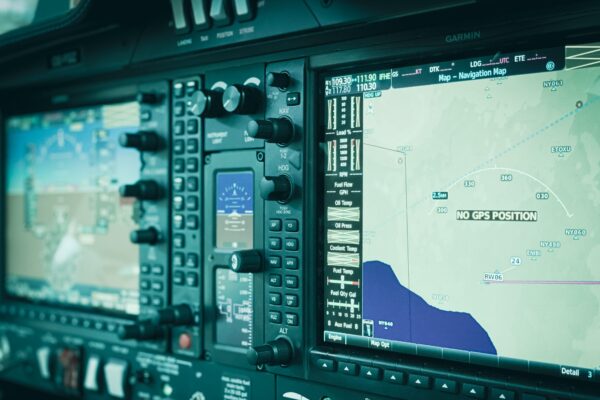


The European Union Aviation Safety Agency (EASA) has issued a significant update to its guidance on Global Navigation Satellite System (GNSS) interference, reflecting growing concerns over the increasing frequency, sophistication, and operational impact of satellite navigation disruption events affecting aviation worldwide.
Published as Revision 4 of Safety Information Bulletin (SIB) 2022-02 on 3 July 2026, the updated guidance incorporates lessons learned from recent operational occurrences and includes the first practical deliverables emerging from the joint EASA-EUROCONTROL task force established to address GNSS interference threats.
The revision signals an important shift in how European aviation is responding to GNSS spoofing and jamming. Rather than treating these events as isolated anomalies, regulators are increasingly approaching them as an enduring operational hazard requiring coordinated action from airlines, air traffic control providers, aircraft manufacturers, airports, and national authorities.
A Growing Challenge Across Multiple Regions
According to EASA’s latest assessment, GNSS jamming and spoofing incidents have continued to increase in both severity and sophistication since early 2022. The agency notes that the highest concentration of events remains associated with areas surrounding conflict zones and geopolitical hotspots, including the Eastern Mediterranean, Black Sea region, Baltic Sea, Middle East, and Arctic areas.
While aviation has long benefited from satellite-based navigation systems such as GPS and Galileo, the growing prevalence of radio-frequency interference (RFI) is exposing vulnerabilities across modern flight operations.
GNSS jamming occurs when external signals prevent receivers from accurately processing satellite information, effectively denying access to navigation data. Spoofing presents an even more complex problem by transmitting false positioning information that can deceive aircraft systems into calculating incorrect locations and navigation solutions. EASA highlights that spoofing often poses a greater safety challenge because it may not be immediately apparent to flight crews.
The consequences extend far beyond simple navigation degradation.
How GNSS Interference Impacts Aircraft Operations
The updated bulletin outlines a broad range of operational effects that have been observed during real-world interference events.
Disruptions can affect critical aircraft functions including:
- Positioning, navigation, and timing information.
- Automatic Dependent Surveillance-Broadcast (ADS-B) performance.
- Terrain Awareness and Warning Systems (TAWS).
- Synthetic Vision Systems.
- Weather uplink services.
- Flight management systems.
- Electronic Flight Bags (EFBs).
- Performance-Based Navigation (PBN) procedures.
- Required Navigation Performance (RNP) operations.
In some reported cases, GNSS interference has led to aircraft rerouting, diversions, deviations from ATC clearances, and increased workload for both flight crews and controllers. EASA also warns that cumulative failures across multiple systems can significantly elevate operational risk and create conditions that increase the likelihood of human error through confusion or cognitive overload.
A New Focus on Operational Resilience
Perhaps the most important aspect of the updated bulletin is its focus on practical operational resilience.
Rather than concentrating solely on technical mitigation measures, EASA’s recommendations seek to ensure that the aviation system can continue operating safely when GNSS services become degraded or unavailable.
The revised guidance introduces four major developments:
- New pilot-air traffic controller phraseology.
- Integration of Electronic Flight Bag technologies.
- Enhanced operational and training requirements.
- Additional air traffic capacity management measures.
Together, these initiatives represent a move toward a more structured and coordinated response to GNSS-related disruptions.
Standardising Communication During Interference Events
One of the most visible changes introduced in Revision 4 is the publication of interim radiotelephony phraseology designed specifically for GNSS interference scenarios.
Historically, pilots and controllers often relied on informal descriptions when reporting suspected jamming or spoofing. The new phraseology establishes standardized communications that enable quicker recognition and response across the aviation network.
New examples include:
- “GNSS UNAVAILABLE.”
- “GNSS UNRELIABLE.”
- “GNSS MAY NOT BE AVAILABLE DUE TO INTERFERENCE.”
- “UNABLE ARRIVAL DUE SPOOFING.”
- “REQUEST TIME CHECK.”
The goal is to improve situational awareness, reduce ambiguity, and ensure a consistent understanding between pilots and air traffic services during degraded navigation conditions.
For flight operations professionals, this may prove to be one of the most practical and immediately impactful elements of the update.
Electronic Flight Bags Become Part of the Solution
A particularly noteworthy addition for operators is the formal recognition of Electronic Flight Bag technology as a tool for mitigating GNSS interference risks.
In Appendix 2 of the bulletin, EASA acknowledges the emergence of EFB applications capable of displaying near real-time GNSS interference information directly in the cockpit. These applications can provide crews with recent operational data showing areas affected by radio frequency interference along planned routes.
EASA supports the use of such applications and recognizes that they may be approved as Type B EFB applications, subject to applicable operational approval requirements. The agency specifically notes that these tools can assist crews in anticipating disruptions before entering affected regions.
For operators increasingly investing in digital flight operations platforms, this represents a growing acknowledgement of the role cockpit data solutions can play in enhancing operational awareness and safety.
Expanded Training Requirements for Pilots and Controllers
Recognizing that technology alone cannot eliminate the risks associated with GNSS interference, EASA has expanded its recommendations regarding personnel training.
Air operators are encouraged to ensure that flight crews receive recurrent training covering both jamming and spoofing scenarios, including techniques for recognizing threats, verifying navigation information through alternative means, and applying appropriate mitigation procedures.
Flight crews are also advised to:
- Monitor non-GNSS navigation sources.
- Verify aircraft position through alternative methods.
- Monitor GNSS time against independent time references.
- Promptly report observed interference events.
- Follow manufacturer guidance for detecting and managing spoofing situations.
Similarly, air navigation service providers are encouraged to incorporate GNSS interference scenarios into controller training programmes and ensure familiarity with the newly introduced phraseology.
Preserving Conventional Navigation Infrastructure
The revised bulletin emphasizes that resilience depends on maintaining alternatives.
EASA recommends that national authorities and air navigation service providers preserve conventional navigation infrastructure including:
- Instrument Landing Systems (ILS).
- Distance Measuring Equipment (DME).
- VHF Omnidirectional Range (VOR) stations.
The guidance reflects a growing consensus across the aviation community that satellite navigation cannot be the sole means of supporting safe operations, particularly in regions where interference events are frequent.
The preservation of conventional navigation aids is increasingly viewed as a critical element of Europe’s navigation resilience strategy.
Supporting Air Traffic Capacity During Disruptions
Another key feature of the updated guidance is greater emphasis on air traffic management.
EASA recommends that ATM/ANS providers continuously assess whether unit capacity and separation standards remain appropriate during large-scale GNSS interference events. Controllers are encouraged to reinforce track monitoring, maintain sufficient surveillance resilience, and be prepared to provide vectoring assistance where required.
These measures are intended to minimize disruptions while preventing capacity reductions from escalating into broader network management challenges.
As interference events increasingly affect large geographic areas, maintaining airspace efficiency has become nearly as important as maintaining navigation capability itself.
Industry Perspective
The publication of Revision 4 marks another important milestone in Europe’s evolving response to GNSS spoofing and jamming.
What began as a series of isolated operational reports has now developed into one of aviation’s most significant emerging threats. EASA’s latest bulletin demonstrates a growing understanding that protecting satellite navigation requires a comprehensive approach combining technology, training, operational procedures, regulatory oversight, and cross-industry collaboration.
For airlines, the recognition of EFB-based interference awareness tools, expanded training requirements, and standardized pilot-ATC communications provide tangible measures that can be implemented immediately. For manufacturers and air navigation service providers, the bulletin reinforces the need to develop systems capable of operating safely in increasingly contested electromagnetic environments.
Most importantly, the update reflects a broader shift in aviation thinking: GNSS interference is no longer regarded as an exceptional event. It is becoming a routine operational risk that must be actively managed.
As reliance on satellite navigation continues to grow, the future resilience of aviation will depend not only on the accuracy of GNSS systems, but on the industry’s ability to detect, anticipate, and safely operate through the disruptions that inevitably accompany them.