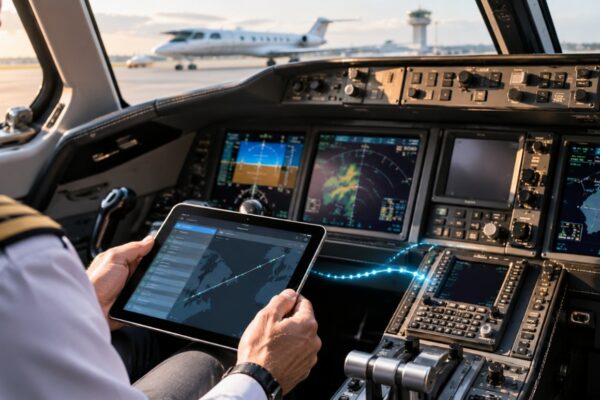


An AI assistant that can interpret aircraft data and advise pilots during flight has moved beyond dedicated test aircraft and into operational military fleets.
Beacon AI has completed a series of flights with its Murdock pilot-assistance system aboard U.S. Air Force KC-46A Pegasus aircraft, marking an important step towards evaluating AI decision support in real operational environments.
The company reports five flights across three aircraft and three airfields, accumulating approximately 20 flight hours during August and September.
AI Assistance Without Taking Aircraft Control
Unlike autonomous flight systems designed to operate aircraft independently, Murdock focuses on supporting the flight crew.
The system reads information from aircraft avionics buses and provides advisory capabilities without modifying certified flight-critical systems.
According to Beacon AI, the technology is intended to help crews manage operational information, improve situational awareness and support decisions throughout the flight.
Crucially, pilots retain operational authority.
Connecting Cockpit Data with Fleet Intelligence
Murdock forms part of Beacon AI’s wider aviation intelligence platform.
Its onboard computing and crew-interface system connects through satellite communications to Lighthouse, the company’s cloud-based fleet data platform.
The architecture is designed to collect flight information, support analysis across aircraft and enable the development of additional safety and operational efficiency capabilities.
Beacon AI ultimately aims to use accumulated operational experience to improve the assistance available to flight crews.
Testing on Operational Aircraft
The flight programme began during the Emerald Flag exercise at Eglin Air Force Base in Florida and continued at two additional airfields, including a civilian airport.
Unlike trials conducted exclusively on dedicated research aircraft, these flights involved aircraft assigned to operational military units and flown by fleet aircrews.
The programme was conducted under an AFWERX Tactical Funding Increase agreement with Air Mobility Command.
Beacon AI describes the achievement as a significant milestone towards wider operational adoption.
However, the flights represent an evaluation milestone rather than evidence of fleet-wide deployment or regulatory approval for commercial airline use.
Why This Matters for Flight Operations
The development highlights an emerging approach to cockpit technology: AI systems that interpret operational information and assist crews without assuming control of the aircraft.
For commercial aviation, the potential applications include improved access to relevant flight information, reduced workload and better operational awareness.
Beacon AI identifies commercial aircraft as a future market, but broader adoption will depend on further testing, demonstrated reliability and applicable certification requirements.
The significance lies not in replacing pilots, but in exploring how AI can support their decisions during increasingly complex flight operations.