

Bringing Performance-Critical Calculations into a Single Pilot Workflow
As flight operations become increasingly digital, operators continue to seek ways to reduce cockpit workload, simplify flight preparation and eliminate the need for pilots to move between multiple applications to complete essential tasks.
Against this backdrop, the strategic partnership announced between TALORA and ASAP Inc. at Air Charter Expo 2026 represents a noteworthy development in the evolution of the modern Electronic Flight Bag (EFB).
The agreement will see ASAP’s established STAR Mass & Balance and Runway Performance capabilities integrated directly into the TALORA EFB platform, creating a more connected operating environment for flight crews across airline, charter, business aviation and special mission sectors.
For pilots and operations teams, the announcement reflects a broader industry trend toward consolidating operational tools into unified platforms that can support the full flight lifecycle, from pre-flight planning through to post-flight analysis.
Why Performance and Weight & Balance Matter
While navigation charts and flight documentation often receive significant attention within EFB environments, runway performance and weight and balance calculations remain among the most critical operational inputs for every flight.
Before departure, pilots must determine whether an aircraft can safely operate from a specific runway under prevailing conditions while ensuring the aircraft’s loading remains within certified limitations.
These calculations are influenced by multiple variables including:
- Aircraft weight
- Centre of gravity limits
- Runway length and conditions
- Temperature
- Wind conditions
- Airport elevation
- Obstacles and terrain
- Regulatory requirements
Errors or inefficiencies in these processes can have significant operational consequences.
As a result, many operators continue to invest heavily in certified digital performance solutions that improve accuracy while reducing calculation workload.
The integration of these capabilities directly into an EFB environment reflects an effort to place essential operational tools in one location rather than distributing them across multiple applications.
Moving Towards a Single Operational Platform
One of the biggest challenges facing modern flight crews is information fragmentation.
Many pilots today rely on separate systems for:
- Navigation charts
- Flight planning packages
- Electronic Flight Folder (EFF) functions
- Aircraft documentation
- Performance calculations
- Weight and balance calculations
- Weather intelligence
- Company operational information
Each system may require separate logins, user interfaces and data entry processes.
The TALORA-ASAP integration seeks to address this challenge by allowing performance calculations to become part of a larger connected workflow.
For flight crews, this potentially reduces the number of application transitions required during flight preparation while improving the consistency of operational information across different planning functions.
For operators, the benefit extends beyond convenience. Integrated systems can help reduce duplicate data entry, improve data consistency and support greater operational standardisation.
What ASAP Brings to the Partnership
ASAP Inc. is an established provider of aircraft performance and weight and balance solutions with more than three decades of experience supporting aviation operators worldwide.
Its STAR platform provides certified runway performance and weight and balance calculations across one of the industry’s broadest aircraft support portfolios.
According to the announcement, the initial phase of integration will provide TALORA users with access to performance calculations covering more than 320 aircraft types, including aircraft from major manufacturers such as:
- Airbus
- Boeing
- ATR
- Embraer
- Bombardier
- De Havilland
- Gulfstream
- Cessna
- Cirrus
- BAE Systems
- Dassault Aviation
- Pilatus
This broad coverage means the solution is designed to support not only airline operations but also charter, corporate, regional and special mission operators.
For many operators managing mixed fleets, this level of aircraft support may be a significant consideration when evaluating integrated EFB platforms.
Supporting Connected Flight Operations
The announcement also highlights the growing importance of connected operational ecosystems.
Historically, many operational decisions were supported by standalone applications that performed specific tasks exceptionally well but shared limited information with adjacent systems.
The aviation technology landscape is increasingly moving in a different direction.
Modern operators are looking for platforms that can connect information generated throughout the operational chain and make it available at the point where decisions are made.
In practical terms, this means creating stronger connections between:
- Flight planning
- Performance calculations
- Aircraft documentation
- Operational communications
- Weather information
- Electronic flight folders
- Crew workflows
The ultimate objective is not simply digitisation, but creating a workflow where information only needs to be entered once and can then be used consistently throughout the operation.
Industry Perspectives
Commenting on the partnership, Stephen Young, Chief Commercial Officer at TALORA, described the agreement as an important step in the company’s long-term strategy:
“This partnership represents an important step in ensuring TALORA becomes the Electronic Flight Bag of choice for operators worldwide. Our strategy has always been clear: to build dynamic, next-generation EFB solutions while partnering with the industry’s leading specialists wherever possible to ensure pilots receive the best experience and operational capability available.”
Young also highlighted the operational benefits of bringing multiple functions together within a single platform:
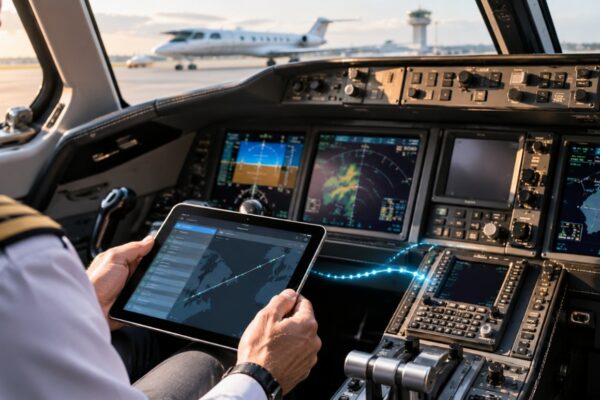
“By integrating ASAP STAR’s proven Mass & Balance and Runway Performance solutions directly into TALORA, we are creating a genuine all-in-one EFB environment. Pilots will be able to access Navigation Charts, Electronic Flight Folder functionality, documentation, Mass & Balance and Runway Performance calculations from within a single application, enabling a more efficient and intuitive workflow.”
Looking beyond immediate pilot benefits, he pointed to the broader value of operational data integration:
“This integration is also an important step towards unlocking the full value of operational data. By connecting information generated throughout every phase of flight across the TALORA ecosystem, operators can reduce pilot workload, minimise the potential for errors, improve operational efficiency and ultimately enhance both safety and the user experience.”
From ASAP’s perspective, the partnership reinforces the value of combining specialised performance expertise with modern digital flight operations platforms.
Justin Ruff, Global EFB Consulting Manager at ASAP, said:
“ASAP INC is proud to partner with TALORA to integrate our industry-proven Mass & Balance and Runway Performance solutions into a next-generation EFB platform. By combining ASAP’s aircraft performance expertise with TALORA’s connected flight operations environment, we are helping operators streamline cockpit workflows, reduce workload and provide flight crews with the critical information they need through a single platform.”
What This Means for Pilots and OCC Teams
Although the most visible benefits of the integration will likely be experienced by flight crews, operational control centres (OCCs) also stand to gain from greater system connectivity.
Performance calculations, aircraft loading information and operational planning data are all closely linked. As digital flight operations platforms continue to evolve, airlines and operators are increasingly seeking environments where operational information can move seamlessly between departments and users.
An integrated EFB platform that combines documentation, planning tools, operational data and performance calculations can contribute to a more consistent operational picture across both the flight deck and operational support teams.
For charter and business aviation operators, where pilots may have greater direct responsibility for performance and loading calculations, workflow simplification can be particularly valuable.
The Continuing Evolution of the Electronic Flight Bag
The electronic flight bag has evolved significantly from its original role as a digital replacement for paper manuals and charts.
Today’s leading EFB platforms are increasingly becoming operational ecosystems that bring together multiple data sources, applications and decision-support tools.
The TALORA-ASAP partnership reflects this evolution.
Rather than adding another standalone module, the focus is on integrating certified performance and weight and balance capabilities within a broader connected environment designed to support pilots throughout the operational journey.
As operators continue to pursue greater efficiency, improved safety margins and simplified cockpit workflows, integrations that combine specialised operational expertise with modern digital platforms are likely to become an increasingly important feature of the next generation of flight operations technology.
For pilots, dispatchers and operators alike, the trend is clear: fewer disconnected systems, more integrated workflows, and a growing emphasis on turning operational data into actionable information at the point of decision-making.