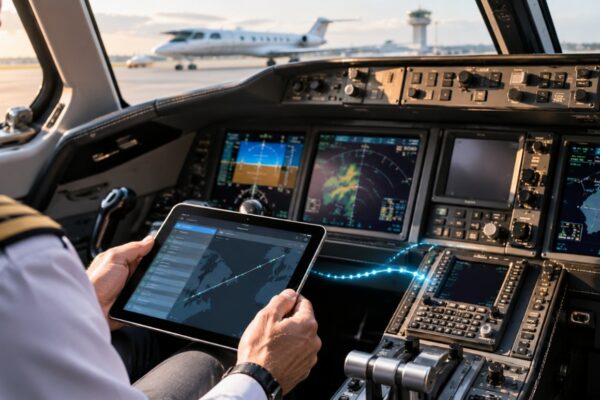


Two pilots can be individually skilled, yet still struggle to operate effectively as a crew. The transition from flying an aircraft to managing it together requires a different set of competencies, communication, workload management, decision-making and the ability to anticipate each other’s actions.
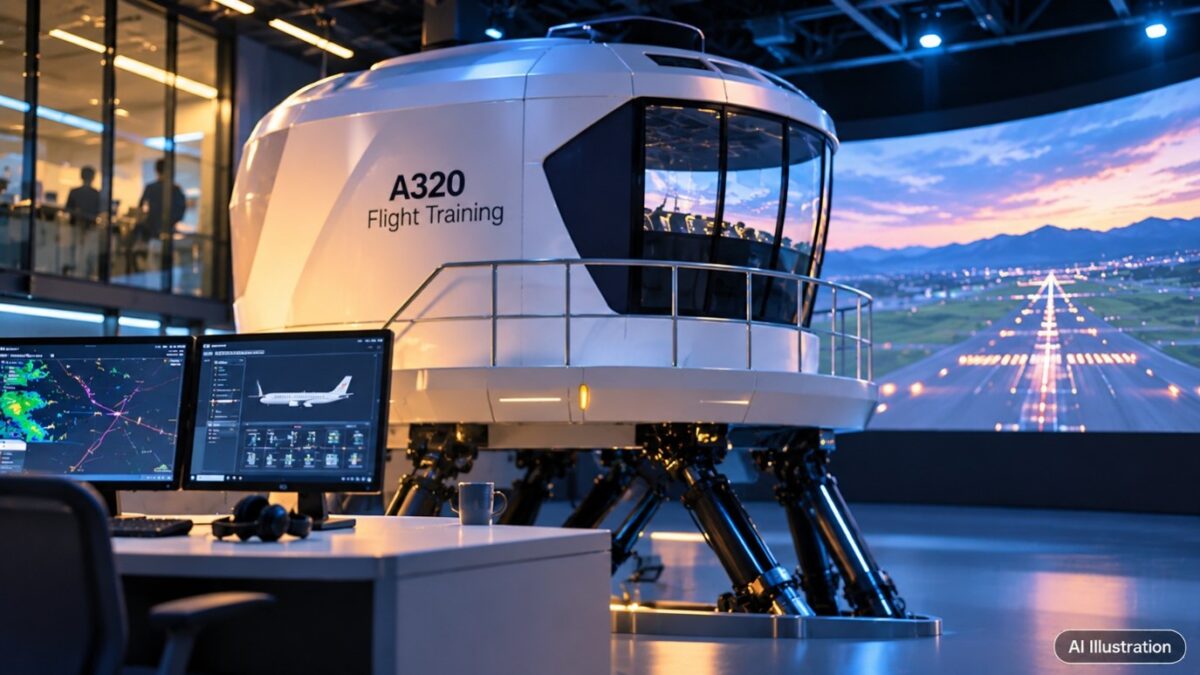
Developing those skills is a central purpose of Multi-Crew Cooperation (MCC) training, and one of the capabilities supported by ICARE’s Airbus A320 simulator in Morlaix, France.
The French aviation training organisation has renewed the EASA FNPT II MCC qualification of its Exail-built A320 training device, maintaining its approved capability for procedural and multi-crew training.
The renewal comes as ICARE prepares to expand its training offering, including plans to introduce Airbus A320 Airline Pilot Standards MCC (APS MCC) courses.
Training Pilots to Operate as a Crew
The Exail Airbus A320 Flight Navigation and Procedures Trainer has been operational at ICARE since 2023.
Developed using aircraft manufacturer data, the device is designed to reproduce relevant A320 systems, flight characteristics and cockpit procedures within a structured training environment.
Its training applications include MCC and other approved instructional activities within the device’s qualification scope.
For pilots transitioning towards airline operations, the value extends beyond learning where cockpit controls are located.
Multi-crew training develops the coordination required when two pilots must manage a flight together, particularly when workload increases or circumstances change unexpectedly.
Consider an approach where deteriorating weather requires a change of runway while air traffic control issues revised instructions.
One pilot must maintain aircraft control and manage the flight path, while the other handles communications, verifies changes and supports the decision-making process.
Both must maintain a shared understanding of the aircraft’s position, configuration and operational priorities.
Such scenarios illustrate the competencies that multi-crew training is intended to develop. They are illustrative examples, not a description of a specific ICARE training exercise.
A Qualified Training Device, Not a Full-Flight Simulator
ICARE’s renewed qualification is FNPT II MCC, a classification that permits specified flight navigation, procedural and multi-crew training activities.
It should not be confused with Level D full-flight simulator qualification.
ICARE also operates an EASA Level D Airbus A320 full-flight simulator, providing a separate training capability for activities requiring that level of device qualification.
The distinction is important because different simulator classifications support different training objectives and regulatory credits.
Exail has described its A320 training platform as being developed with future FTD Level 2 capability in mind. However, ICARE’s currently published device classification remains FNPT II MCC, and the latest renewal does not represent an announced upgrade to FTD Level 2.
Preparing for the Next Stage of Training
ICARE’s planned introduction of A320 APS MCC training would build on its existing simulator infrastructure.
APS MCC programmes are designed to develop multi-crew competencies with a stronger emphasis on airline-oriented operational standards, including structured crew coordination and the management of realistic operational scenarios.
The planned expansion should not be interpreted as confirmation that a new APS MCC course has already received approval or commenced operations.
For ICARE, the renewed qualification maintains an established training capability while the organisation develops its future course offering.
For pilots preparing to enter airline operations, the challenge is not simply learning to fly an Airbus A320. It is learning to think, communicate and make decisions as part of a professional flight crew.