

The success of an aviation scholarship is not measured simply by how many students receive financial support. Its longer-term value becomes clearer when those students progress through training and establish careers in the industry.
For Air Canada and CAE, that progression is becoming visible. One of the earliest recipients of the Captain Judy Cameron Scholarship is now flying the Airbus A330 for Air Canada, demonstrating how an initiative launched in 2019 can contribute to the development of future airline pilots.
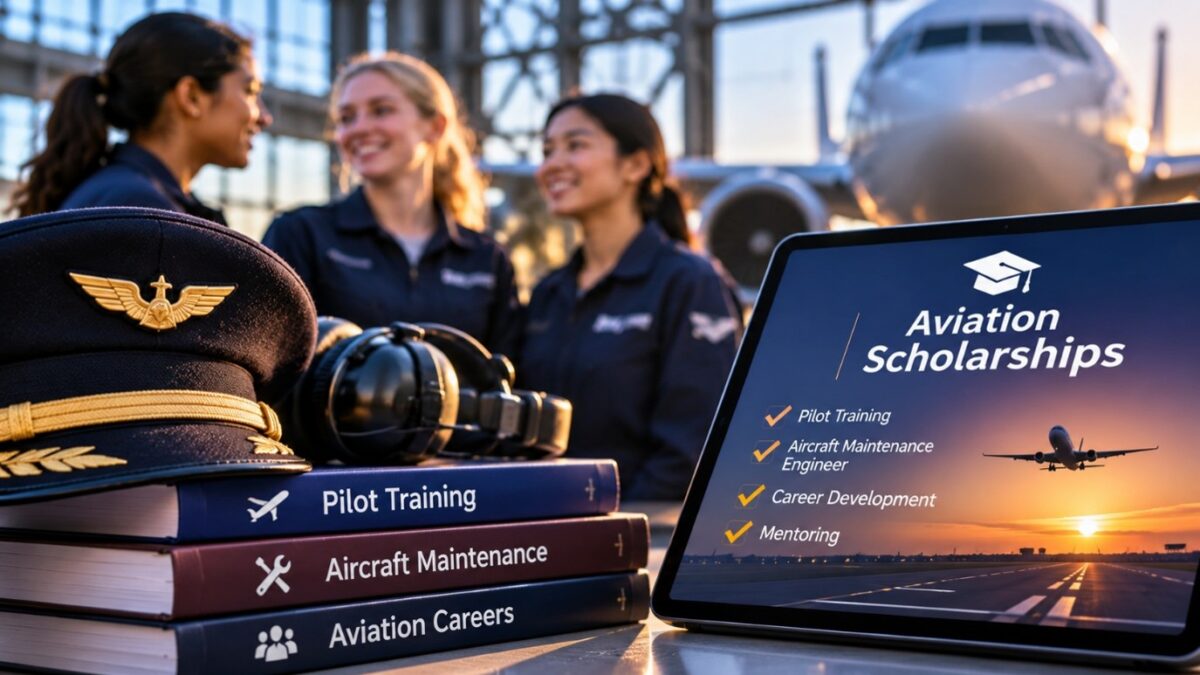
The two companies have opened applications for the eighth edition of the scholarship programme, offering up to eight scholarships to Canadian women pursuing commercial pilot or aircraft maintenance engineer training in 2027.
Applications opened on 1 November 2026, with the programme delivered in partnership with the Northern Lights Aero Foundation.
From Scholarships to Airline Cockpits
The Captain Judy Cameron Scholarship was established in 2019 with four awards, recognising the achievements of Air Canada’s first female pilot.
The programme expanded in 2023 when CAE joined the initiative, doubling the number of scholarships available.
Beyond financial assistance, the programme encourages participation in aviation careers through mentoring and professional development.
Selected commercial pilot scholarship recipients may also become ambassadors for CAE’s Women in Flight programme, which promotes aviation careers among women and girls.
Murray Strom, Air Canada’s Senior Vice President, Safety, Security & Flight Operations, highlighted the progression of former recipients, including the scholarship alumna now operating the Airbus A330.
While individual success stories do not establish the outcomes of every recipient, they illustrate the programme’s longer-term ambitions.
Supporting the Next Generation of Aviation Professionals
The announcement comes as the aviation industry continues to address long-term workforce requirements.
CAE estimates that approximately 300,000 new pilots will be needed worldwide by 2034, while women currently represent only around 5% of commercial pilots.
These industry estimates highlight the importance of attracting candidates from a wider range of backgrounds.
However, financial assistance is only one part of the challenge. Training capacity, licensing requirements and employment opportunities remain essential to developing a sustainable aviation workforce.
Honouring an Aviation Pioneer
Captain Judy Cameron joined Air Canada in April 1978 as the airline’s first female pilot.
During a career spanning approximately 40 years and more than 23,000 flight hours, she operated aircraft ranging from the DC-3 and Twin Otter to the Boeing 777.
In 2010, she became Canada’s first female Boeing 777 captain.
Since retiring in 2015, Cameron has continued supporting aspiring aviators through mentoring and her involvement with the Northern Lights Aero Foundation.
Building a Sustainable Talent Pipeline
The 2027 scholarship programme continues a partnership designed to help aspiring aviation professionals overcome financial barriers and access career-development opportunities.
The announcement concerns applications for future scholarships rather than the selection of recipients, and successful applicants are not guaranteed airline employment.
For the aviation industry, the longer-term measure of success will be how effectively initiatives like this help students progress from training into sustainable professional careers.