

The successful conduct of a long-range flight relies on two groups working in close partnership: the flight crew on the flight deck and the operational control professionals in the Operations Control Centre (OCC). While both teams share responsibility for safe and efficient flight execution, they have traditionally used different tools, references and planning resources to assess operational risk and make decisions.
The integration of Apollodor Planning Charts into the ANEMOS 5 Flightplanner seeks to narrow that divide by making a pilot-focused planning resource available directly within the dispatch workflow.
For operators conducting ultra-long-haul, ETOPS, oceanic and remote-area operations, the development introduces an opportunity for OCC personnel and flight crews to work from a more aligned operational picture during the planning phase.
Bringing a Cockpit Perspective Into the OCC
Plotting charts have long been a staple of long-range flight operations. Used extensively by pilots operating over the North Atlantic, Pacific, polar regions and other remote environments, these charts provide a broad operational view that supports navigation, diversion planning, fuel strategy and contingency assessment.
Historically, this information has been primarily associated with flight deck operations.
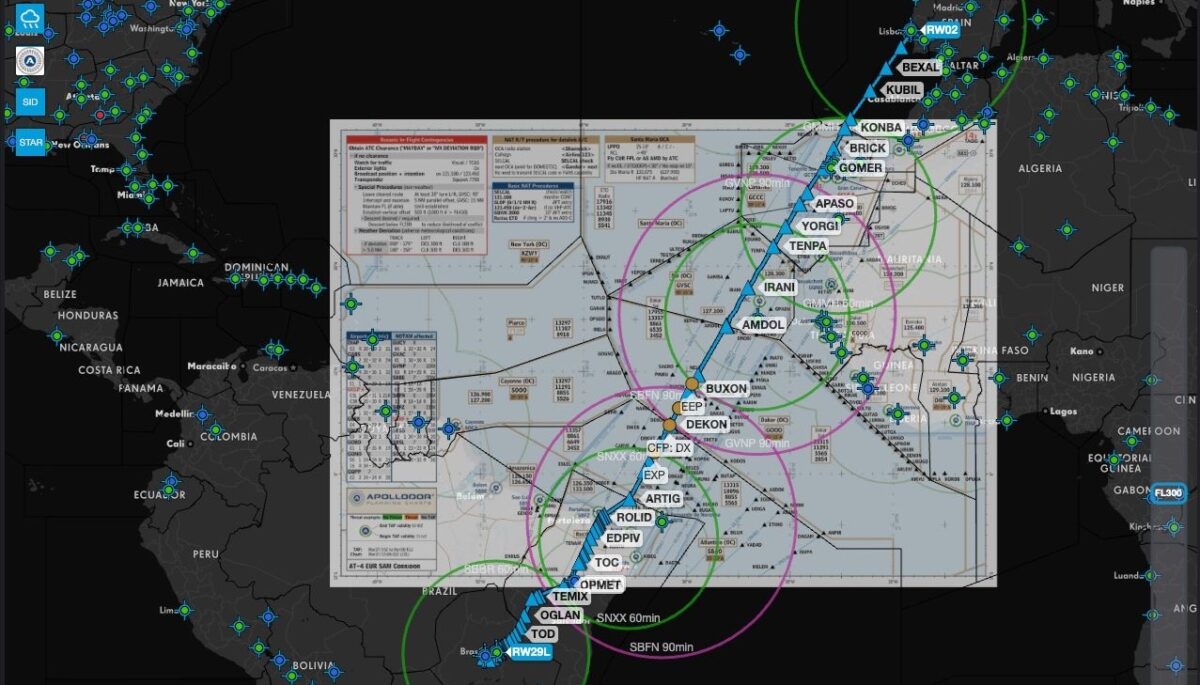
The integration of Apollodor Planning Charts into ANEMOS 5 extends access to the same operationally focused charting environment to dispatchers and flight planners, allowing them to evaluate routes using many of the same visual references available to flight crews.
For OCC professionals, the value lies not simply in having additional charting capability, but in gaining greater insight into how pilots may assess a route, diversion strategy or operational challenge once airborne.
Enhancing Shared Situational Awareness
Airline OCCs operate in an increasingly complex environment. Dynamic weather systems, airspace restrictions, geopolitical developments, traffic flow programs, airport constraints and evolving NOTAMs all require continuous assessment.
During long-range operations, many operational decisions made before departure can have significant implications hours later when an aircraft may be far from suitable alternates or operating in constrained airspace.
Access to common charting material can help establish a shared situational awareness between dispatcher and crew, particularly when discussing:
- Remote and oceanic routes
- ETOPS and diversion planning
- Alternate airport suitability
- Terrain and geographic considerations
- Track system selection across NAT and PACOTS corridors
- Weather avoidance strategies
- Fuel contingency planning
When both parties are viewing operational information through a similar lens, discussions regarding potential threats, mitigations and contingency options can become more focused and efficient.
Supporting Better Decision-Making During Irregular Operations
For most flights, operational planning concludes successfully before departure. However, aviation professionals know that the true test of planning often comes when conditions change.
Diversions, sudden weather deterioration, airspace closures, medical emergencies and technical issues require rapid coordination between the flight deck and OCC.
In such situations, the quality of decision-making is often influenced by how effectively information can be shared and interpreted.
By providing dispatchers with access to pilot-oriented planning information during the pre-flight phase, operators may be better positioned to anticipate challenges and develop contingency options before they become operational necessities.
While no single tool can eliminate the complexity of long-range operations, a common operational picture can help reduce ambiguity when time-critical decisions are required.
About Apollodor Planning Charts
Apollodor Planning Charts were developed by former Lufthansa Captain Gerd Puppel with the objective of modernising the traditional plotting chart concept and incorporating practical operational knowledge derived from real-world airline operations.
The platform has gained recognition among long-haul pilots for combining geographical, navigation and operational information into a single planning environment.
Key features include:
- Worldwide chart coverage with daily updates
- Integrated NOTAM information displayed directly within airport references
- Current North Atlantic Track (NAT) and Pacific Organized Track System (PACOTS) information
- Operational notes and pilot-oriented planning references
- Dedicated application access for flight crew operations
- Extensive use by long-haul flight crews globally
The charts are designed to assist crews in understanding the broader operational environment surrounding a flight rather than focusing solely on route navigation.
The Growing Importance of OCC-Flight Deck Integration
Modern airline operations increasingly depend on effective collaboration between dispatchers and pilots. Regulatory requirements, operational complexity and commercial pressures all place a premium on accurate planning and informed decision-making.
The industry’s ongoing digital transformation has created opportunities to improve this collaboration by ensuring that operational stakeholders have access to more consistent information throughout the flight lifecycle.
The integration of Apollodor Planning Charts into ANEMOS 5 reflects this broader trend toward greater operational alignment.
Rather than viewing dispatch and flight operations as separate activities, many airlines are moving towards a more integrated planning model where both groups contribute to a common operational strategy before departure and maintain that shared understanding throughout the flight.
An Evolution in Long-Haul Flight Planning
For OCC teams, the introduction of pilot-focused charting into the dispatch environment offers an additional resource for evaluating operational risks and preparing for contingencies. For flight crews, it may help facilitate more productive dialogue with dispatch teams who have access to similar visual and operational references.
Ultimately, the significance of this integration will be determined by how operators incorporate it into their workflows. However, the ability for dispatchers and pilots to evaluate long-range flights from a more unified operational perspective represents a noteworthy development in airline flight planning.
As airlines continue to seek improvements in safety, efficiency and operational resilience, tools that strengthen the connection between the OCC and the flight deck are likely to play an increasingly important role in the future of long-range operations.