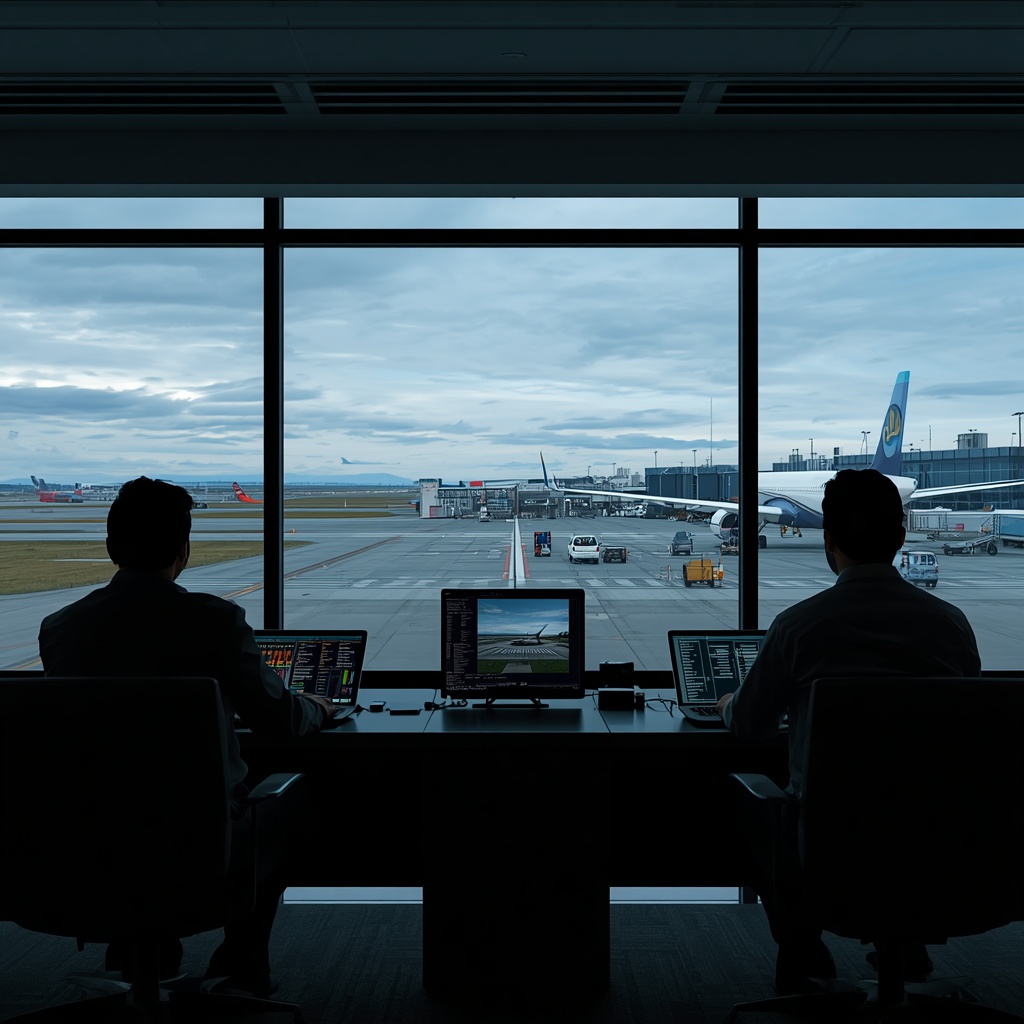

Runway safety often comes down to one fundamental question: does a controller have a clear enough picture of everything moving on the airport surface?
At airports without full surface surveillance, maintaining that awareness can be more difficult, particularly when aircraft and vehicles are operating around runways and taxiways outside the direct view of the tower.
The Federal Aviation Administration (FAA) has now reached its 100th deployment of the Surface Awareness Initiative (SAI), marking another step in its effort to improve surface visibility at airports across the United States.
The technology is designed to provide controllers with greater awareness of aircraft and vehicles operating on airport surfaces, helping give them a more complete picture of activity around runways and taxiways.
Bringing More Visibility to the Airport Surface
SAI uses available surveillance information, including Automatic Dependent Surveillance-Broadcast (ADS-B) data, to provide controllers with additional awareness of surface movements.
That can be particularly useful at airports that do not have the more extensive surveillance infrastructure found at major aviation hubs. For controllers, having better visibility can support decision-making when aircraft are taxiing, preparing for departure, or moving across areas of the airport that may not always be directly visible from the tower. This becomes especially important when multiple aircraft, ground vehicles, and other airport traffic are sharing the same environment.
Reaching Smaller Airports
The FAA’s programme is significant because it is not focused exclusively on the country’s largest airports. The agency has identified 220 airports for the technology, with 100 now having SAI operational. The FAA has also said it plans to deploy the system at another 44 airports by the end of 2026.
For smaller airports, additional surface awareness can provide another layer of support without requiring the same level of infrastructure associated with larger airports.
Technology as Another Layer of Runway Protection
The deployment is part of a wider FAA effort to address runway safety through technology, alongside other initiatives designed to help prevent runway incursions and improve controller awareness. The technology does not replace controllers or established procedures. Instead, it gives operational teams more information to work with.
That distinction is important as airports become increasingly busy and surface movements become more complex. The FAA’s 100th deployment therefore represents more than a numerical milestone. It highlights how improved access to real-time surface information can help extend runway-safety capabilities beyond the largest airports.
For aviation, the broader lesson is simple: better visibility gives the people responsible for managing airport movements a stronger foundation for making safe decisions.